St. George's Episcopal Church

Give Online
  • Welcome
    • Welcome from the Rector
    • Get Involved
    • Visitor Form
  • Worship
    • This Sunday at St. George’s
    • Services
      • Live Stream Worship Archive
    • Baptisms
    • Servers
    • Weddings
    • Funerals
  • Music
    • Choirs
    • Instrumental Ensembles
    • Concerts
    • The St. George’s Organ
  • News
    • News Blog
    • The St. Georgian E-Newsletter
  • Parish Life
    • Open to All in Love Project
    • 300th Anniversary Celebration, 1720 – 2020
    • Formation for All Ages
      • For Adults
      • Youth Group
        • Youth Formation
        • Youth Group
      • For Children and Families
      • Education for Ministry
    • Fellowship
      • Shrine Mont
      • Episcopal Church Women
    • Pastoral Care
  • Grace in Action
    • The Table at St. George’s
    • Other Feeding Ministries
  • Community
    • Racial Justice and Healing
    • St. George’s Episcopal Preschool
    • World Mission
      • Afghan Allies
      • Port-au-Prince, Haiti
    • Resources
  • Giving
    • Donate to St. George’s
    • Stewardship and Giving
      • 2026 Annual Giving and Capital Campaign Giving
      • Ministry List
      • Frequently Asked Questions About Stewardship
    • New to Giving?
    • Planned Giving
      • Giving Money to Save Money
      • Donating Securities
      • Trustees, Trusts and Endowments
    • Donate to the Organ Fund
  • About Us
    • Missional Identity, Purpose, Values
    • Land Acknowledgment
    • History
    • Church Staff
    • Vestry
    • Other Lay Leadership
    • Building Use
  • Quick Links
    • Church Calendar
    • Server Schedule
    • This Sunday at St. George’s
    • Links and Resources
    • Submit a Prayer Request
    • Server Substitution Request
    • Altar Flowers
You are here: Home / Archives for Sermon Blog

Sermon Blog

Pray – January 2020, St. Georgian

January 15, 2020 by St. George's Leave a Comment

The following is Rector Joe Hensley’s monthly opening message from our weekly e-newsletter the St. Georgian. If you’d like to receive our weekly e-newsletter, sign-up here.

Our theme for this month is “pray,” one of the seven steps on the Way of Love. It seems appropriate given some of the current events we have seen so far in the new year.
In early January, our nation took significant military action against Iran, and we are waiting to see whether more escalation will occur. Bushfires in Australia have been devastating and deadly. Earthquakes in Puerto Rico have left many homeless and frightened. There are more things we could name which point to a sense of living in chaotic times, and who knows what will happen before the end of this month.
At such times, I turn to the Book of Common Prayer for prayers that express my feelings sometimes better than I can express them myself. By entering into these prayers which are part of our common life, I feel part of the larger Body of Christ. The prayers section begins on page 810. You can also find the BCP online: https://www.bcponline.org/ Click on the “Prayers and Thanksgivings” tab.
Another section of the BCP which does not get much attention is the Great Litany (p. 148). This intercessory prayer covers a wide variety of conditions. There is a modern adaptation which you can find here. Some examples that apply to our current events:
“From lightning and tempest; from earthquake, fire, and flood, from plague, pestilence, and famine, good Lord, deliver us.”
“That it may please thee so to rule the hearts of thy servants, the President of the United States, and all others in authority, that they may do justice, love mercy, and walk in the ways of truth, We beseech thee to hear us, good Lord.”
“That it may please thee to make wars to cease in all the world; to give to all nations unity, peace, and concord; and to bestow freedom upon all peoples.”
“That it may please thee to support, help, and comfort all who are in danger, necessity, and tribulation.”
We do beseech God to hear us when we pray. There are also times when, as Romans 8:26 says, “We do not know how to pray as we ought, but that very Spirit intercedes for us with sighs too deep for words.” My sense is that God is always praying in us and through us. When we pause to pray, whether with words or in silent surrender to the Spirit’s deep sighs, we are joining with the divine prayer that is never ceasing.
I will close with some words from The Supplication (BCP p. 154): “From our enemies defend us, O Christ; Graciously behold our afflictions. With pity behold the sorrows of our hearts; mercifully forgive the sins of thy people.… Graciously hear us, O Christ.”
Joe+

Filed Under: Adult Formation, Fellowship, Ministries, News Blog, Parish Life, Rector's Blog, Sermon Blog, We Grow, Welcome, Worship Tagged With: e-news, news, st. georgian

Annual Meeting – Sermon from December 8, 2019

December 12, 2019 by St. George's Leave a Comment

Sermon from the Rev. Joseph H. Hensley, Jr., Rector, St. George’s Episcopal Church
Fredericksburg, VA | The Second Sunday of Advent Year A: December 8, 2019

To view the Treasurer’s Report by Tom Meredith, click here. 

Please pray with me. Gracious God, put into my mouth the words you would have me to speak and put into our hearts the words you would have us to hear. In Your Holy name we pray. Amen.

The prophet Isaiah describes a vision a vision of the coming of the Messiah when the whole creation will be changed. The wolf will live with the lamb. A child will play over the whole of the snake. So, I look out at this gathering today, and I see Isaiah’s vision lived out. People of all stripes and personalities and dispositions somehow, someway dwelling together in Christ’s name. Now I’m not going to say who’s the wolf and who’s the lamb. You all can figure that out. Or sometimes we might be both the wolf and the lamb, depends on the day. But it is a joy, it’s just a joy to look out and see this parish in all its variety. It’s a joy to look up here in the gallery and to see all of our music ensembles and all of your wonderful variety showing us how we can somehow come together in harmony. [baby crying] Thank you. So, in that spirit, just turn to your neighbor this morning and say, “welcome in the name of Christ,” just “welcome in Christ’s name,” just welcome each other.

Because it’s Christ who brings us together, and today this second Sunday of Advent we are waiting for Christ to return. During this season we focus on what is really, just for a few weeks we’re focusing on something that is a year-round reality that we are always preparing and waiting for God to be embodied with us. Waiting is not something many of us like to do. It’s an in-between place, but in the waiting and in the in-between is often where God likes to work, and that’s where the prophets tend to show up.

Today we heard from the prophet Isaiah and from John the Baptist, and they are stepping into the gap between what has been promised and what has yet to be fulfilled. They announce that things will need to change and things are going to change. And they also proclaim that this time in the middle, this threshold time, is an opportunity for growth, an opportunity to go deeper in our faith. So, we are gathered today in this annual meeting of St. George’s parish, and in many ways our parish is in a threshold time, standing at the threshold. We’re on the threshold of a watershed 300th anniversary of the founding of this parish, but we’re not quite there yet. We’re on the threshold of developing a master plan for our space that is more accessible to all, as well as additional and improved space for ministry, but we don’t have the plan yet. We still need your feedback about that, by the way. Go to our website and look at the plans that we are putting out there. Give us your feedback so we’ll know better about which way we need to go.

Beyond our parish, we see thresholds in our world. We see religious institutions at the threshold as they watch attendance decline. We see the culture at large standing at thresholds when it comes to climate change or the widening political divides. We’re waiting at a lot of thresholds wondering what is coming next. We’re in a full-time Advent, and it’s not easy. And in times like this the world’s advice is often to hunker down, store up supplies, make plans for your personal survival. The prophets, on the other hand, call us to venture out, to be vulnerable, to go into the wilderness, to wade into the waters of chaos, open our hearts and listen for God’s guidance as we take the risk of being in community together.

John the Baptist appears not in the streets of Jerusalem. He doesn’t baptize in the courtyards of the temple. No, he appears in the wilderness by the river Jordan. He draws the people out from behind their gates, from behind their walls to enter a threshold territory, to take a risk. So, you might remember that the river Jordan was the boundary that the ancient Israelites crossed over after they had been wondering in the wilderness for forty years. They crossed the river Jordan into the promised land. By baptizing in that river, John recalls a time before there were temples in Jerusalem, before there were synagogues, a time when the Israelites were strangers in the land of their ancestors. And he’s calling them to stand at that threshold again and to repent and re-enter the promised land with a new vision.

So, as we approach the 300th anniversary of the founding of the parish of St. George’s, we too are called to repent, to examine ourselves, and renew our vision so that we might continue to bear the good fruit. And it might help us to remember that there was a time before this building ever existed, a time when this parish was founded when there are hardly anything at all, and from that came centuries of ministry. During our anniversary we will tell the stories of our historic past, stories of glory, and stories that remind us of our ongoing need to repent, and we will also celebrate the ministry of the present. For a few weeks now, we’ve had brochures in the pew that talk about our 300th anniversary and the ways that you can get involved in it. Our Communications Commission worked hard this year to create a beautiful calendar to help us mark the next eighteen months, beginning in January, and on the cover is this painting by St. Georgian Elizabeth Seaver. Many of you have wondered about this, what’s this bird doing on the church? In some ways, this bird represents sort of the Holy Spirit, sort of the wings of the Spirit covering God’s people, inviting everyone into this space. As I’ve meditated on this image, part of what has come to me is that part of what the mother bird does is kick the young ones out of the next. So maybe part of what’s going on here is that the Spirit is also sending us out into the world to cross the thresholds again. So, during this celebration we will also pray and talk about our future.

What is our mission, and how is God pushing us out into the neighborhood? Because we can’t rest on the legacy of our ancestors, we can’t just assume that because people know our steeple and recognize the bell chiming out the hours of the day that they will recognize the love of God in Christ that we show. We can’t assume that just because the founders of the city sleep in our graveyard that the citizens today are coming to know the love of God in Christ through us. We do make a big impact in Fredericksburg, St. George’s does, but it’s still a good time to listen with fresh ears to the voices of our neighbors, maybe the neighbors we don’t know yet, asking where is the Holy Spirit sending us next? This is part of the work of our young adult missioner David Casey, Pastor David, as he is going out to the college campuses and connecting with young adults in our community who are yearning to make a difference and have a lot to say. In your bulletin today, don’t look now. I know you’re tempted to get it out and start reading it during the sermon, but there is an insert that lists just a few of the ministry highlights of the past year. This is just a small sample of the many ways both welcoming inward and going outward that we are about our mission.

So many things going on, and as we live into this threshold time, we also might see ourselves standing on the threshing room floor. John the Baptist warns that the Messiah is coming who will clear his threshing floor and gather the wheat into the granary. Like many of you, I’m not a farmer so I had to learn more about what the threshing floor actually meant. The threshing floor is the place where the farmer would beat the protective outer chaff apart from the inner kernels of wheat, and then the farmer would toss it all into the air with this winnowing fork so the chaff would blow away in the wind. So, what are the aspects of our parish life that continue to be the wheat, the kernels of our life? And what might be the chaff which has had its use, but now we can let go of it? During my sabbatical this summer I thought a lot about what’s wheat and what’s chaff, what’s essential, and what could I let go of. While I was away our clergy and church staff also wrestled with these questions of how much there is to do, and what’s essential, and how can we let go of some things. In that process there were new people who were involved in ministry, particularly pastoral care. Thanks be to God for the many ways our parish thrived during my and John’s sabbaticals over the summer. Thanks again to everyone who took on additional roles. I’m particularly grateful to Pastor Areeta who took on many of my roles, and it is a joy to share in the priestly ministry of this place with her. She’s blessing us with her considerable gifts.

So, what is wheat, and what is chaff? This may be a question you’ve asked in your own lives. It’s not always an easy discernment. Last February we revealed our new St. George’s branding, a new logo and bulletin and web formats. The purpose of this work has been and continues to be making it easier for people to recognize our message, to receive it, and to share it. So, in that re-design of our bulletin we looked for ways that we might simplify, and we took out the list of the weekly worship servers and the staff and the vestry, which took up a lot of room. I thought it might be something we could let go of. We got a lot of feedback from people who use that list as a way to connect with those who are serving and learn their names and talk to them after the service. I actually got a written petition from the Episcopal Church Women about this. When you get a written petition from women in their 70s and 80s, yeah. It’s hard in a congregation our size to know each other. So, we have heard you, we have listened, and we’ve added a new insert to the bulletin with the servers and the staff and the vestry. And I especially want to thank Laurel Loch, our parish administrator and communications director, for the amazing amount of work she has done to bring us into this rebranding process to clarify and enhance our communications and help us transition to these new formats with a lot of grace. So many of you wanted that bulletin insert to know each other better, and, yes, we need to know each other better. This is one of the main challenges we face, and we know each other better not just so that we can say hi on the street, and that’s important, but it helps you so the ministry doesn’t have to be from the top down but can be from the bottom up. And so I challenge us to reach out across the pews and across the aisles, across the services and get to know each other and tell us what you need to help you get to know each other.

Here’s an example of what can happen when people get to know each other. There is a new ministry in our community called SAWS Virginia, and it was born in St. George’s in many ways from members who were nurtured and nourished through this church and supported by our staff and ministry leaders, and who are now building wheelchair ramps for home-bound disabled persons in our community. And it doesn’t say St. George’s on it, but it is an amazing example of how people can connect in a place like this and go out and do amazing things in Jesus’ name beyond the church walls.

So, that bulletin insert, it also teaches us something about stewardship. Although it may not seem like much, it’s just a small sheet of paper, the cost of the staff time spent producing it, the additional materials, and the copying costs we calculated come to about $50 a Sunday, $2,600 per year. Or you can break it down the other way and say roughly 12 cents a person on an average Sunday. As we stand at the threshold of our church growing, we do need to be more transparent about the resources that we need to support our mission. Thanks be to God for all the ways that you all are giving of your resources to support that mission, the ways you give that support the large and the small details of our ministry together. Your financial generosity has allowed us to grow.

Over the five years that I have been your rector, you have grown in your giving, and our staff has grown too. The work they do has grown. I think you all know, but we have an amazing staff. I wish I could tell a personal story about every one of them, our two full-time clergy, our two part-time clergy, our four full-time lay staff, and nine part-time lay staff, including two that work almost full-time on a non-stipendiary basis. And add to that our nursery care givers and our preschool teachers. And yet we often find ourselves feeling stretched thin. The reality is that for a big church we are operating on a medium-sized budget. So, for our 2020 budget, the personnel committee of the vestry studied our staffing and listened to the voices of ministry teams and is proposing some additional staff positions that I want to tell you about.

One is a part-time communications assistant who will help with all the additional communications that are going to be a part of the 300th anniversary. Another is a part-time Grace in Action coordinator to help organize the volunteers and the resources for The Table and the community dinners and other ministries with our neighbors on the margins. Another is a full-time facility director to oversee the care of our buildings and grounds from top to bottom as they’re used seven days a week, often from morning until night, and the extensive maintenance that comes along with having an older building. We have tons of volunteers that I’m going to talk about in a minute. And our volunteers, they want and they need our staff, the support of our staff. In a time when many organizations are leaning on the same people and overworking people to do more with less, I want to be an organization that strives to work sustainably with the right amount of volunteers, the right amount of staff, to model an organization with faithful balance. So, in order to do this, we are going to need to continue to grow in our giving. And the vestry has hired a consultant who will help us over the next year to better connect with our supporters to communicate our thanks and tell the story of our ministries, and that consultant will guide us as we look ahead to next fall when we will have a capital campaign to fund our long-term infrastructure improvements.

I’m going to say two additional quick things about the stewardship. One is we currently have a deficit for this year, and we can close it by all of our folks who are currently pledging giving of their offerings before the end of the year. And the second is that if you are able to increase your pledge for 2020, that growth will help our ministry grow toward balance and sustainability. We need you to let us know soon if you’re able to do that as we are planning the budget for next year, and we want to balance the budget next year.

So, let’s talk about volunteers who really are signs of God’s grace in action in this place. Thanks be to God for the many people giving of their time and their talents in small ways, in great ways. I wish I could thank all of you by name because you are the primary ministers of this place. You are. We’re just here to help. I do want to name a few individuals whose ministry has crossed a threshold, who are stepping back after years of dedicated service. Many of us saw Linda Carter, Linda Miller, and Chris Cook, otherwise known as the LLC, they were featured in the Free Lance Stars as difference makers in our community. They have been champions of our weekly feeding ministry known as The Table for years. Linda Carter and Chris Cook are both taking a step back from their roles that sometimes have had them here full-time. We thank them. Many of you don’t know Dot Morris, but Dot is one of our altar guild members who’s stepping back after many years of faithful service supporting our Wednesday noon Eucharist. I got permission to tell you this, by the way. It’s hart for her to step back, but it’s just time. And hers is an example of the kind of humble ministry that so many quietly and faithfully contribute toward the mission of sharing the love of God in Christ.

Later in the service we will elect four new vestry members and thank the four members of our vestry who are ending their terms. And I give thanks to the vestry volunteers for their continuing service overseeing the stewardship of our resources, connecting with all of our ministry groups, and discerning where God is calling us. I have to especially thank Marilyn Farrington, this year’s senior warden, who is also crossing the threshold as she ends her service. Marilyn supported our staff and the parish this summer significantly while I was away on sabbatical. As she ends her service, she’s still chairing, along with Lisa Durham, the 300th anniversary committee. She’s been a champion of champions in recruiting others to help. There are so many others that I wish that I could name. I will draw your attention to the Stephen Ministry little flyer in your pew this Sunday as an example of those quiet but powerful volunteers at work. There are so many others I wish I had time to name. Thank you and thanks be to God for your offering.

If you’re wondering to yourself, how do I get more involved? Just ask, and sometimes you might have to ask a second time. We’re trying to clarify the process by which people go from being newcomers to offering their gifts in ministry, and I want to thank Pastor Bob for offering an important workshop in spiritual gifts discernment two times this year that has resulted in people finding joyful ways to offer themselves in God’s service.

So, as I’m getting ready to close, I promise I’m getting ready to close, let me say that this threshold space, this waiting space, this Advent space, this is Holy space. This is where God works in our lives as a community and in our individual lives. As I said, you might be facing a threshold in your life. Well, now’s the time to claim that as Holy time, a Holy opportunity. So, as we prepare to cross the threshold into a fourth century of ministry in this community, now is the time for us to renew our commitment to being God’s Holy people. So, I want you to start thinking now about what you’re going to do during the 300th anniversary to ground those celebrations in faith. I’m putting out the challenge, putting out the challenge that we would read the entire Bible over the course of the 300th anniversary. It can be done in roughly 300 minutes a month, 10 minutes a day. We’ll be sharing more about that challenge. What is the challenge that will make a difference for you as we live into this Advent threshold time?

In the coming year between now and next November when we’ll cross another threshold, I want to claim this Holy space, this is Holy space, where we cannot allow the bitterness of politics to disintegrate our bonds of affection for each other and distract us from our mission. Our primary allegiance is to Christ, and that means if we disagree, and that’s okay if we do, we can do so with kindness and with care. We can listen to each other with love. We will continue to pursue justice and truth, and we may not always agree on how we pursue that, but we can do that with the love of Christ because in this Holy place, it is more important to reveal Christ to each other than to prove we are right. And if you are ever concerned about messages that you hear in this place, please say something. Too often I hear of people quietly upset. I want to invite us to share our concerns, to take the risk of opening our hearts so that we can grow in our understanding and so that we can practice loving each other. Our doors are open. We want to listen.

The hymn we sang at the beginning of this service says, “On Jordan’s bank, the Baptist’s cry announces that the Lord is nigh.” Someone told me after the 7:45 this is like a Baptist sermon, it was getting on pretty long, so I am bringing it to a close. Christ is coming. We stand on the threshold of that return. We are an Advent people, waiting to see how Christ will lead us into a new creation, preparing for the mission God has for us here and now, a mission that we have already been on for a long time but that is being revealed to us in new ways. As we wait, as we watch, as we hope together, may we with the prophets of old proclaim the good and the challenging news that the kingdom of heaven is coming near.

Filed Under: Adult Formation, Fellowship, Ministries, News Blog, Parish Life, Sermon Blog, Welcome, Worship Tagged With: annual meeting, sermon

Learn – November 2019, St. Georgian

November 13, 2019 by St. George's 2 Comments

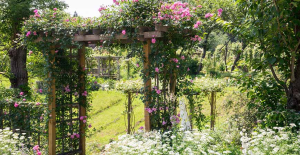
Trellis_Learn The following is Associate Rector Areeta Bridgemohan’s monthly opening message from our weekly e-newsletter the St. Georgian. If you’d like to receive our weekly e-newsletter, sign-up here.

“God comes to us disguised as our life.” – Paula D’Arcy

‘The Way of Love’ is patterned after the monastic rules of life. I like the analogy of a rule of life as a trellis; a structure around which the rest of our lives can grow and take shape. We all have core values and commitments that we orient our lives around, sometimes these are expressed formally as in baptism or wedding vows, and sometimes they function as an internal compass, quietly shaping our decisions and responses.

The vows in the ordination service form a trellis. In preparation for ordination, I spent some time reflecting on the vows I was about to make. One of the promises that excited me the most was: “Will you be diligent in the reading and study of the Holy Scriptures, and in seeking the knowledge of such things as may make you a stronger and more able minister of Christ?” This vow articulated a commitment to a life of intentional learning about God, our sacred story, and all of God’s creation. Implicit in that promise, is the idea that we are not expected to have all the answers and that we are constantly in a process of becoming, of growth and learning, and ultimately transformation.

Learning requires a certain posture: it embraces curiosity and questions, it relies on a desire and willingness to receive, and an openness to wonder. These are helpful postures to life in general, which is perhaps our greatest teacher. My spiritual director often refers to life experiences as “earth school”. Experiences that teach us something new about ourselves, something new about God, that expand our capacity for love and healing, providing us with opportunities to grow into the full stature of Christ. I have taken earth school classes in self-acceptance, embracing solitude, to let go of control and trust God… I’ve come to suspect that the curriculum is as long as my life! Where is learning in the trellis of your faith? What class in earth school are you taking right now? How might this faith community support your learning?

May our faith journeys never cease to be a source of learning and growth.


Yours in Christ,

Areeta+

Filed Under: Adult Formation, Fellowship, Ministries, News Blog, Parish Life, Sermon Blog, Uncategorized, We Grow, Worship Tagged With: e-news, enews, learn, st. georgian

At Evensong

October 3, 2019 by St. George's Leave a Comment

Thank you to St. Georgian Beth Spragins for her original poem “At Evensong”. Beth wrote this poem in response to the question, “What I love about St. George’s”.

At Evensong

(A Rannaigheacht Ghairid, a traditional Gaelic form)

Candlelight
Softens corners of the night,
Stills my mind to meditate
And await the whispered might

Of the One
Who extinguishes the sun
With a painting in the sky.
Lullabies of love begun

Long ago
Echo in the ebb and flow
Of tidal tunes that retreat
With silver heat of moon glow.

My torch fails.
Dark devours the altar rails,
Hides the beauty of the grace
That fills this place when faith pales.

Lamps burn bright!
You come, put despair to flight,
And your hands that hold the dove
Serve with love by candlelight.

Copyright © Elizabeth Spencer Spragins 2019

Filed Under: Fellowship, Giving, News Blog, Parish Life, Sermon Blog Tagged With: give, giving, poem, poetry

Beautiful Proportion – Sermon from September 29, 2019

October 3, 2019 by St. George's Leave a Comment

Sermon from the Rev. Joseph H. Hensley, Jr., Rector, St. George’s Episcopal Church
Fredericksburg, VA | The Sixteenth Sunday after Pentecost Year C: September 29, 2019

In today’s Gospel, Jesus tells a story, a parable, a teaching story, and this story is told to the Pharisees and to his disciples about a rich man and a poor man.  Parables are supposed to be mysterious, so I don’t want to try to wrap it all up and tell you exactly what it means.  But I do want one thing to be abundantly clear, and that is that God is always coming to our assistance, helping us to live the life that really is life, a life of wholeness and beautiful proportion.

Why does Jesus tell this parable, this story?  After he tells the parable of the unjust steward which we heard last week, Jesus is ridiculed by the Pharisees, the Jewish teachers and law experts, and the text of Luke tells us that they were lovers of money.  So Jesus is telling these stories about money, and they are immediately criticizing him.  In response to their criticism, Jesus really calls them out.  He says, “You try to justify yourselves in the sight of others, but God knows your hearts. For what is prized in the sight of human beings is detestable before God,” and he’s talking about money.  Then he goes on to remind them of the enduring truth of the scriptures, of all the law and the prophets, and then he tells the story of this rich man and this poor man named Lazarus.  Notice the rich man is not given a name.  The rich man is disproportionately wealthy.  He wears the finest clothes of purple and linen every day, and he is feasting every day as if it were a holiday every day.  The poor man Lazarus is disproportionately poor.  He has absolutely nothing and is disproportionately ignored by the rich man.  Only the dogs notice his suffering and come to lick his wounds.

Now the Pharisees would have been surprised by the turn the story takes.  Because it was often thought, as Bob told us in his sermon last week, that people who suffered in their earthly life were being punished by God for their sins or for the sins of their forebearers.  Likewise, people who prospered in the world were seen as blessed by God and being rewarded for something.  But Jesus reverses the order when he says that Lazarus when he died was carried by the angels themselves to be with father Abraham, the faithful ancestor of the Jewish people, whereas the rich man suffered in Hades, the land of the dead.  Jesus dramatically shows the gap between the rich man and the poor man, and this probably shocked the Pharisees.  I think this is why Jesus tells the parable.

Jewish New Testament scholar Amy-Jill Levine has described parables as bombs thrown into our status quo, bombs thrown into our status quo to explode our understanding, and so while we might wonder is Jesus saying that the rich people go to the bad place, and the poor people go to the good place, is this what heaven and hell are going to be like?  I think that the purpose of the story is not to predict what will happen, not to paint a definitive picture of what heaven is like, or the afterlife.  But it is to surprise the hearers, to explode their understanding such that they might wonder in some new ways.  I think Jesus tells the parable to the Pharisees so that they, and us, may take a hard look at our own disproportions and do something about them.  And that we might consider that our disproportions in this life have spiritual consequences for us now and in the life to come.

I don’t think I need to spend a disproportionate amount of time in this sermon talking about the disproportionate way our world has become in terms of wealth and poverty, but I’ll just say a couple things.  Just as in Jesus’ time, we have people who are so rich, who have so much it is obscene.  And we have people just as in Jesus’ time who have so little it is sickening, and we have ignorance of the needs of the poor now just as there has always been.  Just as in Jesus’ time, there are self-righteous persons who justify their abundance and who maybe give a little bit here or a little bit there, but in their hearts there is only the impoverished love of money.

Now I think most of us are somewhere in the middle, somewhere on the spectrum.  We might be at the high end of the spectrum, in the middle, or at the low.  Most of us are not obscenely rich, nor are we desperately poor.  And we may not even love money, but we feel like we have to give a disproportionate amount of our time and our energy worrying about it.  We may feel trapped because money and the system of money rules our lives.  The funny thing is that compared with most of the world and compared with humanity through most of human history, we, most of us in this room, have so much more than we need, and yet we worry that all it will take will be a turn in the markets or a crisis in our life, and we will be, we will not have enough.  Such disproportions in life are not what God wants for us individually and us as a community.

So, what bomb does this parable drop into our status quo?  How might this parable challenge us to look at our disproportions, to look in the ways in which we are out of balance, in which some parts of our lives take up way too much room and other parts do not have enough room?  I can’t answer that question for you, you’re going to have to wrestle with that yourselves because I don’t know your individual circumstances, but I wonder if this parable also invites us to ask about the proportions we would like to see.  How can our lives be proportioned such that it shows wholeness and the life that really is life?

Several years ago, my wife Sarah and I got together with four other couples for some dinners and some conversations in each other’s homes around the topic of Sabbath economics.  We got together to explore and imagine how our lives might more proportionately reflect the Biblical values of Sabbath.  Sabbath is not just taking one day off a week for rest.  Sabbath is a way of living that is centered around the fact that God is God, and we are not, and that God provides what we need, and that everyone is invited to share in rest and abundance.  So, as couples we talked with each other frankly about the reality of living in a world that worships money and how hard it is when we would like to order our lives differently but it’s difficult to see how.  We talked about the joys of giving and sometimes the challenges of not feeling like we can give as much as we wanted to or the invitation to live more simply and yet how difficult it can be to live in such a complicated world.  Like the parable, some of these conversations were a bomb dropped into our status quo, they really blew our minds open.  I think that everyone who participated ended up doing something differently as a result.  None of us changed our lives dramatically overnight.  It certainly wasn’t enough, but it was a start, it was a start.

We’re entering as a parish into this time of year that we often call stewardship season, a time of praying about our sacred financial offerings, our gifts that we give back to God through the church in gratitude for the wonder in all that God has done.  I think many of us feel like we wish we could give more.  We’re not sure how to start.  We’re talking about money after all, and money is one of the most difficult topics, especially in church, and as Paul reminds us, the love of money is the root of many kinds of evil, that is not money itself but the love of it that gets us into trouble.  Maybe it’s time for a bomb in our status quo.  This year as you consider what you might give back to God in the form of financial offerings here at St. George’s that you discern whether you can commit to that, your offerings in the coming year and let us know what those are in the coming weeks on your pledge card.  The invitation may be not just to consider what you can do but to consider the proportions of your life.  And not to start with what’s realistic, but to start with what you’d like to see, what proportion of your time and energy would you like to give to the people and the things you care about most?  What proportion of your income, what percentage of your income would be a fitting offering to God in thanks for all that God has given you?  Where would you like to be?  If you really want to throw a bomb in the status quo, find some people that you trust and talk with them about it.  It might open your eyes in some new ways.  Start with the right proportions and then work back to what you think you might be able to do to make those proportions more a part of your reality.  Dream audaciously, and then see how those proportions might start to come into balance.

This idea of proportionate giving is thinking of your giving as a percentage of your overall income, so the Bible gives us the tithe of the ten percent as one standard.  That may not be where you are but thinking of those gifts not in terms of the amount but in terms of the proportion of the whole.  This way of thinking also though kind of invites us to think of our lives not as fragmented pieces that are fighting with one another but our lives as one whole that fits together.  One of the things I’ve said after my sabbatical is I don’t want to try to fit my life in around my work anymore.  I want my work to be a part of the whole of my life, and I want my giving to be part of a greater whole of how I take care of what God has given me.  How is God inviting us to live lives of wholeness and beautiful proportion?  Maybe your pledge this year to give one part in ten or one part in twenty or one part in a hundred, whatever it is, maybe it will be a stretch, maybe you can make it a stretch for you, not just as a sign of what you’ll give but as a sign of your desire to live a life of wholeness and proportion.

If you figure out how to do this, please let us know because we’d love to hear your wisdom.  Most of us feel daunted by this in some way, shape, or form.  So the good news from the parable today is that the poor man in the parable is named Lazarus, and Lazarus in Hebrew means my God has helped, and God has always and will always help the poor, and that includes, thanks be to God, the poor in imagination, the poor in courage, the poor in resolve.  When we turn our hearts from seeking the things of this world to seeking the things of God, God will give us a disproportionate measure of grace because that’s how God’s economy works, and possibly God might give us a bomb in our status quo because that’s also how God often works.  So, watch out for that.  God has helped, God is helping, God will help us to live lives of beautiful proportion.  Thanks be to God.

Filed Under: Adult Formation, Giving, Parish Life, Sermon Blog Tagged With: giving, podcast, sermon

  • « Previous Page
  • 1
  • …
  • 3
  • 4
  • 5
  • 6
  • 7
  • …
  • 16
  • Next Page »

Recent Posts

  • Children’s Choir and Chimes
  • Life in Christ Preaching Series
  • Free Concert at St. George’s Featuring Peter and Will Anderson, with guitarist Adam Moezinia

YOU ARE WELCOME AT ST. GEORGE’S CHURCH inclusive of race, nationality, sexual orientation, gender expression, and tradition.
© 2026 St. George's Episcopal Church · Physical Address: 905 Princess Anne Street · Fredericksburg, VA 22401 · Mailing Address: P. O. Box 7127 · Fredericksburg, VA 22404
Main Office: 540.373.4133 · Pastoral Emergencies: (call or text) 540.361.8573 · Email [email protected]