 The season of Lent is a special time of renewing our relationships with God, ourselves, and others as we prepare for Easter. These 40 or so days, for centuries, have been a time of intentional practices for Christians and those preparing for baptism into the faith. Whether you are new to Lent or seeking a new way to observe the season, we hope this page gives you resources to explore and adopt a practice. Not everyone will do the same things, but by making this time special together as a community, we support and encourage one another.
When and how long is Lent?
- The Episcopal Church observes Lent during the 40 weekdays and Saturdays between Ash Wednesday and Holy Saturday (this year between February 18-April 4). On Sundays we have a reprieve from acts of discipline and self-denial and celebrate the Holy Eucharist, but in a more humble way (wooden processional cross instead of brass, for example). So the whole season actually covers a 46-day period.
- Other traditions, such as the Orthodox, will observe the season using a different schedule, counting 40 days prior to Holy Week, then observing Holy Week in addition to Lent.
Ash Wednesday
The journey of Lent begins with Ash Wednesday (February 18). See the website or newsletter for a schedule of services, including services specifically for children and families. Make time to come to one of these services. The liturgy for Ash Wednesday contains a lot of inspiration for how to observe this holy season.
If you are new to Ash Wednesday, it can sound intimidating. Part of the service includes the option of coming forward to receive a mark on the forehead with ashes made from burned palm branches as a sign of our mortality and dependance on God. If you receive the ashes, after the service you can leave them on or wash them off. Do what is meaningful for you.
The Invitation to a Holy Lent during this service (Book of Common Prayer p. 264-265) includes “…I invite you, therefore, in the name of the Church, to the observance of a holy Lent, by self-examination and repentance; by prayer, fasting, and self-denial; and by reading and meditating on God’s holy Word.”
Portions of Matthew 6:1-18 are read during this service as well, as Jesus gives instructions about three important spiritual practices: giving alms, prayer, and fasting.
The Litany for Repentance (p. 267-269) can be a good guide throughout Lent to help examine our lives and ask God for forgiveness and grace for transformation and renewal of life.
Practices During Lent
Doing something special, a “practice,” during Lent can make the season more tangible and meaningful. We have organized the following list of practices according to the themes mentioned in the Ash Wednesday service. Always consult our weekly bulletin and newsletter for more information about worship services, special events, and groups.
There is a lot here. Do not feel pressure to do “everything.”
If you are brand new to Lent, just try one practice and do it consistently.
If you are more experienced with Lent, choose practices that feel renewing and even challenging. Resist the temptation to let the practice be either a source of pride or misery, both of which point us more toward ourselves than to God.
The point of practice is not to “make perfect” but to make time and space to open our hearts, minds, bodies, and souls to God. Practices also prepare us to witness Jesus’ death and resurrection in the drama of Holy Week and Easter.
Self-examination – being honest with ourselves and noticing God in our lives
- Keep a Lenten journal. At the end of each day, note moments of grace and blessing, moments of challenge or discouragement, opportunities to start again the next day
- Read a special book. Reading can help us reflect. See list of suggested titles below. Connect with the St. George’s online book group.
- Reflect on the Baptismal Covenant (Book of Common Prayer p. 304-305).
- Invite someone you trust to reflect with you (spouse, friend, therapist, clergy).
- Take an action in response to self-examination.
- Get a Lenten Calendar and post it on the fridge to remind you to observe Lent.
- Just sit still and “be” for a few minutes each day in silence and solitude.
Repentance – intentionally turning away from sin and toward God, asking and receiving forgiveness
- Reflect on the Litany of Penitence and write about how it relates to your life.
- Schedule an appointment with clergy to discuss the Rite of Reconciliation of a Penitent, a time to formally confess specific sins confidentially and in private.
- Utilize the tools in the 12 Steps of recovery.
- Perform acts of kindness and service as a sign of turning toward God’s love.
Prayer – speaking and/or listening with God in a holy dialogue
- Adopt set time(s) for prayer during the day. Set an alarm to remind you to pause.
- Explore the Lord’s Prayer with the Episcopal monks of the Society of St. John the Evangelist (they have a lot of other good resources too)
- Use the Devotions for Individuals and Families in the Book of Common Prayer for morning, noon, evening, and/or end of day (p. 137-140)
- Join with the Daily Office Prayer group that prays on Zoom Monday-Friday at 8 am and 5:00 pm.
- Attend Sunday worship weekly as well as the special services of Ash Wednesday and Holy Week.
- Say Compline (short night prayer service) before bed. (p. 127).
- Visit the Centering Prayer group on Thursdays at 8 am in the nave.
- Attend the Visio Divina sessions in conjunction with Trinity Episcopal on Tuesday evenings at 7 pm at Trinity, combining prayer with visual reflection.
- Find a “devotional” such as Forward Day by Day (available in the church office or entryway/narthex) to give you a short reading and reminder to pray. Forward Movement publications has a lot of good options.
- Listen to a podcast or use an app on your phone (see podcast list below).
Fasting and self-denial – in the “wilderness” with Jesus
- Learn healthy practices of fasting: not eating and/or drinking during certain times. Share your intention with clergy or someone you trust. The challenge and purification of fasting can be spiritually and physically beneficial but can also be harmful if done carelessly.
- Abstain from consuming certain foods, drinks, or activities with spiritual intention. Abstaining reminds us that our true needs are filled by God, not by things.
- Be creative. Abstain from something unusual. Have fun with it.
- Eat and drink with mindfulness and joy. Gather with family and friends.
- Fast/abstain for all 40 days or just certain days. Fridays, especially, are traditional.
- If you normally practice self-denial in ways that make you unhealthy or that steal your joy, intentionally practice the opposite. Challenging yourself to have a moment of healthy, joyful indulgence might be more beneficial for you.
Reading and meditating on God’s holy Word – spiritual nourishment
- Read Scripture daily or at least regularly. Read one of the Gospels during Lent.
- Join a Bible study, whether in person or with the Rector’s weekly email group. See the weekly St. Georgian newsletter for more information.
- Purchase a study Bible as a reference guide. Ask clergy for recommendations.
- Share the Bible with children in your life through Bible stories or illustrated versions of Scripture designed for kids.
- Read and meditate on the Scripture lessons for the upcoming or previous Sunday throughout the week. Find the lessons at www.lectionarypage.net
- Pick a psalm reading and letting it become a prayer. Start with Psalm 23 for example.
Giving alms – joyful releasing and generosity for our own benefit as well as others
- Start a regular practice of giving in support of St. George’s ministry
- Donate to St. George’s Communion Alms fund which clergy use to help neighbors and parishioners in times of urgent need.
- Collect change or cash in a box or jar throughout the 40 days as a daily practice.
- Donate clothing to the FXBG Free Closet, run by our own X. Thomas.
- Donate other items or sell them to give you some space and benefit others.
- Give your time through acts of serving that bless others. Volunteer at The Table or Community Dinner.
Suggested Lenten book list from staff and clergy
- Being Disciples – Rowan Williams
- God Did Not Make Us to Hate Us – Lizzie McManus-Dail
- Field Notes – Sarah Bessey
- A Rhythm of Prayer – edited by Sarah Bessey
- The Cost of Discipleship – Dietrich Bonhoeffer
- Hanging By a Thread, the Questions of the Cross – Samuel Wells
- Mere Christianity – C.S. Lewis
- The Dream of God – Verna Dozier
- The Way of a Pilgrim – spiritual classic by an unknown author
- Seek and You Will Find, Discovering a Practice of Prayer – Rhonda Mawhood Lee
- A Generous Life – 20 days of devotion – we have copies in the office
- A book of poetry or work of fiction that invites self-reflection
- A book about social justice or ecological justice that inspires compassion and action
Some inspiring podcasts for prayer and learning
- Forward Movement podcasts for daily Book of Common Prayer services (Morning, Evening, Compline)
- BibleProject explores specific books of Bible and/or themes in Scripture
- And Also With You, featuring two Episcopal priests (and sometimes our own Fr. Ethan Lowery) Reclaiming an Ancient Christian Faith for Modern Christian Life
- Rule of Life Podcast exploring essential practices for Christians
- Pray As You Go (Jesuit Roman Catholic (Episcopal-friendly) resource includes daily scripture and prayer)
 Join us Saturday, February 28, 2026 for the Annual Coldest Night of the Year Walk in downtown Fredericksburg. Sign up to walk one of two routes (3k or5k), joining a parade of hundreds of other friends from the area, all sharing one goal: to raise awareness and funds to support the many services Micah Ministries provides our unhoused local neighbors. All who register to walk with our team and raise a minimum $75 before the event begins will earn a classy knit hat known as a toque. Those who can’t join us to walk can also support Team St. George’s with your 2026 tax-deductible donations. For more information, contact Team Co-Captains Pam Jewett-Bullock 540.729.0840 or Charles Bullock 540.729.1054. To register/donate, find our team page
 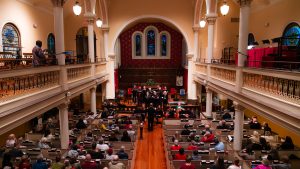 own for its lush acoustics and welcoming atmosphere, St. George’s offers a year-round concert series showcasing both local and nationally recognized artists. This performance promises an afternoon of “beautiful music in a beautiful space,” continuing the church’s tradition of musical excellence. Admission is free, with donations gratefully accepted at the door to support our music and ministry at St. George’s and St. George’s partnership ministry in Haiti.
 It’s that time of year again when The Table at St George’s participates in GivingTuesday, a global day of giving fueled by the power of social media and you! On Tuesday, December 2, you will have the chance to make a difference in our community by helping to ensure everyone has access to nutritious food and nourishing community! The Table at St. George’s operates every Tuesday in Market Square distributing farm fresh produce alongside gleaned breads, proteins, and snacks free of charge. Truly a place where the friendships formed sustain as much as the produce, this free farmers market has become a staple (and necessity) for the wider community. Support this work by giving this #GivingTuesday!